
Wastes and Drains
, by Jennifer Howe, 2 min reading time
, by Jennifer Howe, 2 min reading time
Wastes, This is the piece in the sink, bath, basin, shower that can contain a plug, their job is to take the water to the Trap underneath, the trap then connectes the waste to the waste pipe there are 6 main types of waste
Wastes and Drains
Wastes, This is the piece in the sink, bath, basin, shower that can contain a plug, their job is to take the water to the Trap underneath, the trap then connectes the waste to the waste pipe there are 6 main types of waste
1- Open, As it said its open it lets waterflow straight through these are mainly in showers, some freestanding bowls and some commercial sites pubs/clubs etc.
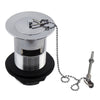
2- Plug and chain, The old type, but they work!
3- Pop up, Basins- these have a rod attached to the tap or through a tap hole that connects maually to the plug to lift and lower. Baths- These are cable operated and normally to rotate the overflow to lift and lower the plug, Sinks- These usually have a dial mounted on the sink that rotates to lift and lower.
4- Click Wastes (Often incorrectly referred to as pop ups) these use a spring loaded mechanism that when you push it down it locks down, push it again and it springfs up. these also come in removable or easy clean mushroom types, Named due to there mushroom shaped plugs that can be pulled up removing the spring mechanism and hair trap for easy maintenance and cleaning.
5- Flip over- these use a captive plug that rotates to seal the waste or open it These are dying out as they don't work very well in hard water areas.
6- Auto wastes- these used to be fitted to a few top end roll tops that didn't have overflows, they worked on water pressure if they bath water got to high they would open to let water out (effectively overflowing) and you could press them to open when you wanted to drain the water. again these seem to have died out in favour of the Removable Click Waste.
Traps - This is the piece under the basin, bath, tray etc, it has a small amount of water "Trapped" inside it's job is to create a seal stopping sewer air coming back out, most traps (Except bath) have a removable cover or bowl that can be unscrewed to clean the trap out then refitted without removing the whole trap, modern shower traps are stripped and cleaned from inside the tray removing the grill / cover plate then pulling out the internal trap. Whereas bath traps normally reqiure complete removal to clean them out.
Waste Pipes These (in the UK) come in 2 standard sizes 1 1/2 inch (40mm) and 1 1/4 inch (32mm) although they vary between push fit and solvent pipe, 32mm used for basins and 40mm for baths, showers and sinks. For a 40mm waste pipe, Building Regulations require a fall gradient between 1:40 (25mm per metre) and 1:110 (approx. 9mm per metre). For a 32mm waste pipe, Building Regulations require a minimum fall of 18mm per metre (or 1 in 55) to ensure adequate drainage, with a maximum run of around 1.7 metres to a washbasin. These pipes then join your drainage outside along with your toilet via a 110mm (4inch) pipe
Not all toilet seats are created equal. We explain the differences between duroplast, polypropylene, MDF, and moulded wood — including pros, cons, and why seats...
Toilet Seat Materials Explained: Duroplast, Polypropylene, MDF & Moulded Wood — Which Is Right for You?Discover TOP-FIX taps and wastes—the revolutionary installation system that allows complete fitting from above, eliminating the need for underneath access. Learn how TOP-FIX differs from...
Read more about what are top-fix taps and wastes? the revolutionary installation system explained
What Are TOP-FIX Taps and Wastes? The Revolutionary Installation System ExplainedSmart toilets aren't just a luxury—they deliver measurable hygiene benefits and life-changing accessibility advantages. Find out how they work and which models we recommend.
Read more about how smart toilets improve hygiene and accessibility
How Smart Toilets Improve Hygiene and AccessibilityHome › News › Smart Toilets: Are They Worth It? Smart toilets have gone from a curiosity to a genuine bathroom upgrade that more UK...
Read more about are smart toilets worth it? full buyers guide
Are Smart Toilets Worth It? Full Buyers Guide
Subscribe to our emails